A great site for those who love to hunt, fish, make sausage, cook, grill, and use that smoker!!

Time To Check Deer Area

Every year we go up in late fall to check our deer area for deer signs and do a little grouse hunting as well. This year was no exception. The weather was great and that’s a bonus to add to the enjoyment to “just being there”. Brought the camper up there and set it up in it’s usual spot. It’s an old 1974 Jayco camper that still functions great. Plenty big for our needs.

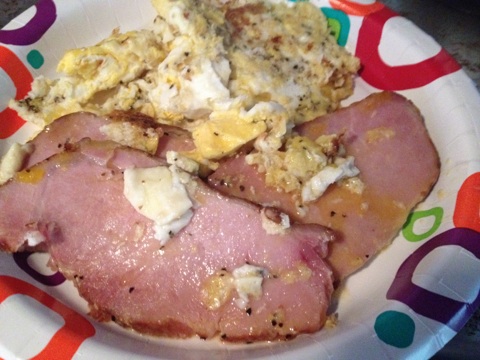
I was up there with my son-in-law Clay and my brother Ed. Al “the chef” came up us well to help out and bird hunt a bit. We normally start out with a good breakfast to get us started. Some thick sliced home smoked Canadian bacon along with eggs as a side. Nothing fancy, but filling for sure.
IMG_1224

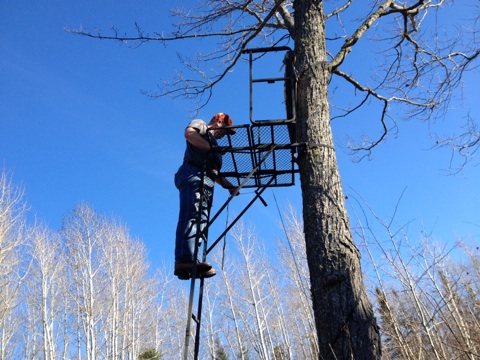
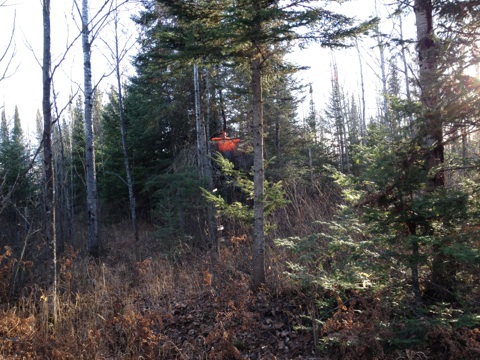
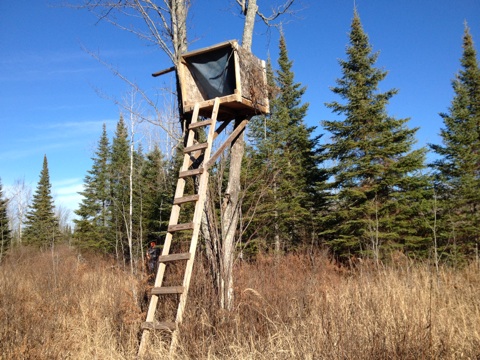
Then we head out and check our stand areas. Never know what the years elements can do as far as damage, so it pay’s to check everything out. Everything looked fine this trip, so we spent time bird hunting the remainder of the day and then some the next day before we had to head home. IMG_1201
I set up camp with my trusty camper and put up some chairs for a nice fire later in the day.
IMG_1205

The trees held up well and our stands were safe and ready for us to climb this coming firearms season.
IMG_1220

IMG_1206

IMG_1212

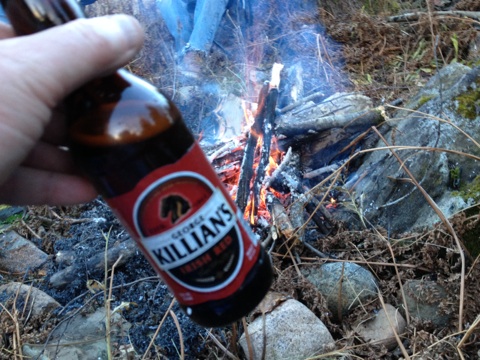
After a good day walking the forests a warm fire is built and it’s time to relax with a cold one [or two]. If you get a chance, get up to your hunting area and check it out. Can’t wait to get back up there to hunt for 5 day’s. Buck’s only this year but that’s ok with me. Time to build that herd back up. Love just being there. I’ll have a full report when I get back.

Time For German Gumbo!!!

IMG_1181

That’s right!! My favorite comfort food of all time. I have eaten this as a child, made by my mom, years ago and still make it to this day. The German kraut/bacon I make was a side dish for many of our meals [Check out the Roladen recipe as well in the recipe page]. This meal has changed over the years from just kraut and fresh hocks to how you see it today in my recipe page. That’s why I call it a gumbo, with it’s many added ingredients. And that in turn, makes this dish so addicting. Check it out and give it a try. If you like kraut, then you will LOVE this comfort food!!!

A missing duck hunter near Mille Lacs Lake forced to spend the night in the woods is a good reminder that anyone spending time outdoors should know wilderness survival basics, said an official with the Minnesota DNR. A recent news release from the Crow Wing County Sheriff’s Office said that 76 year old Glenn Huff of Garrison had become disoriented while hunting and was unsure of his whereabouts. Rather than wander aimlessly, Huff then hunkered down with his dog for the night, and at first light started to make his way back to his vehicle. The following morning Huff and the dog met up with sheriff’s office deputies who reported Huff in excellent condition following the incident.

“That incident is a good reminder that anyone can get lost in the woods, including hunters,” said acting Capt. John Paurus, DNR enforcement education program coordinator. Panic is an enemy for those who get lost. They should remember the acronym S.T.O.P

SIT: They should collect their thoughts and realize they are not lost; they just cant find camp or vehicle.
THINK: What do they have at their disposal both physical and mental that can help them in this situation? Inventory survival kit and start to develop a plan.
OBSERVE: Look around, is there shelter, water, an open area where searchers could see them?
PLAN: Create a plan of action. Pick a spot that to build a fire for heat and signaling. In addition, can the spot provide basic shelter?

A basic survival kit can be packed into a quart zip-lock bag and should contain the following:

1. Basic shelter materials: Two 55 gallon garbage bags and 30 feet of braided mason’s line.
2. Means to start a fire: Disposable lighter, waterproof matches or matches stored in a waterproof container, or 10 feet of toilet paper or petroleum Jelly soaked cotton balls in a waterproof container.
3. Means of signaling: Whistle, signal mirror [could be an old CD]. A fire is also a signal.
4. Means of knowing direction: A compass.
5. Comfort food: Food bar, nuts or trail mix.

Anytime people head outdoors they should plan for the unexpected and be prepared to spend the night in the woods. Here are some musts before heading out.

1. Always let someone know the destination and return plan.
2. Carry a compass or GPS and know how to use it.
3. Carry a basic survival and first aid kit.
4. Carry a cell phone.
5. Check the weather and dress for it.

These outdoor safety tips are part of the DNR hunter education firearms safety program. An online study guide for hunters and outdoor enthusiasts is on the DNR website at http://www.dnr.state.mn.us/safety/firearms/index.html. Click on HunterCourse.

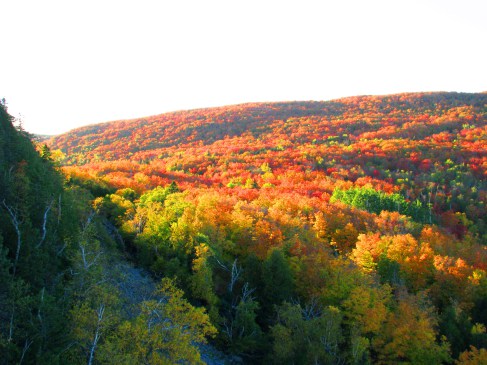
Why does this year seem to be particularly good for fall colors? I have often wondered why one year would be different than another. Here is what Linda Radimechky, DNR area park naturalist says about it. Some of those magnificent colors we’re seeing this fall are there all summer; it’s just you can’t see them because of the green chlorophyll in the leaves. As our days get shorter and the temperatures cool down, trees cease green chlorophyll production, allowing the yellow chlorophyll to show.

Any sugar compounds trapped in the leaf react with each other in the presence of sunlight to form the red, orange and purple pigments called anthocyanins. The more sun, the more brilliant the colors. The weather so far this season is perfect for brilliant fall colors-sunny dry days and chilly, but not freezing nights. The slightest change-too hot, too cold, too wet or too dry- can slow the process or cause trees to lose leaves before they change color. For the latest information on when and where the fall colors are expected to be at their peak, check out the DNR’s fall color finder at http://www.mndnr.gov/fall_colors.

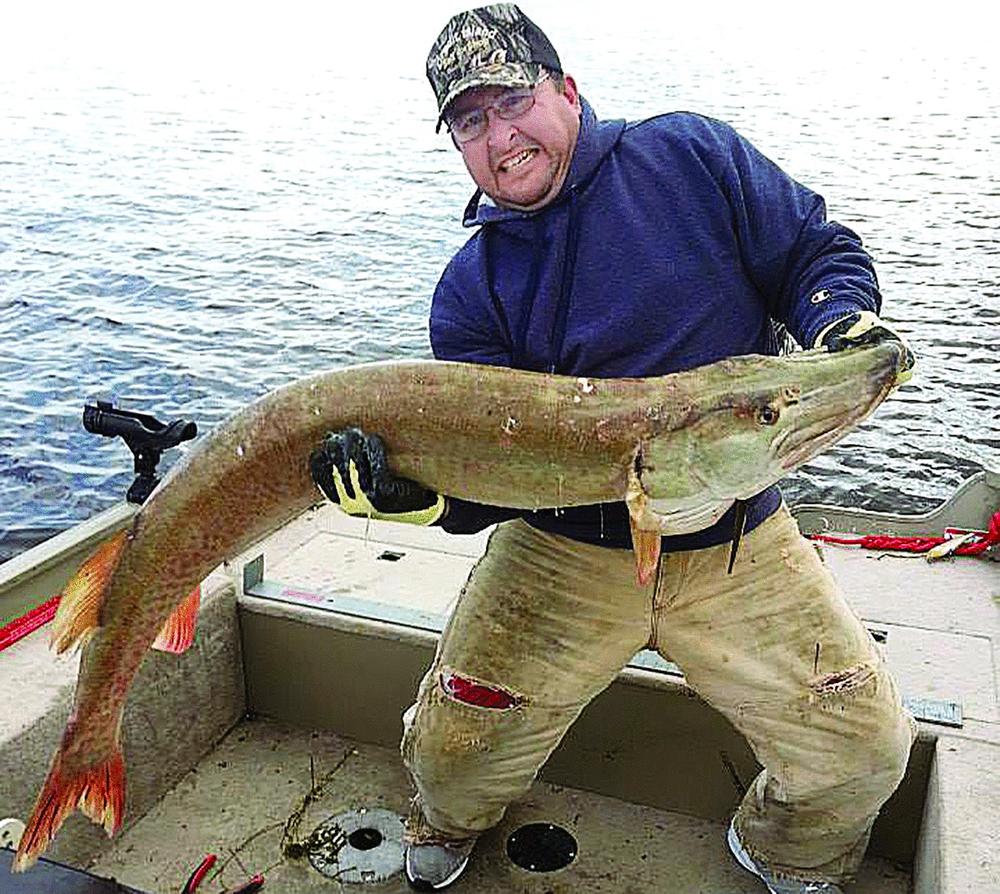
When David Ramm hooked the big muskie on Crane Lake, he wanted to make sure his dad got to see it. “I knew this was a fish of a lifetime,” said Ramm, 36, of Blue Grass Iowa. “I said, look at her in case she gets off. I want you to see how big this fish is. He said, Oh, my god”. He was fishing with his dad, Gary Ramm, 74, of Davenport, Iowa, when he caught and released the big muskie on Sept. 11. Crane Lake is known more for its walleyes, crappies and northern pike. No muskies have been stocked in the lake. The fish measured 58 1/2 inches long with a 28 inch girth, David Ramm said.

A muskie of that size is almost unheard of in northern Minnesota. “The biggest we’ve ever measured on Lake Vermilion is 55.6 inches,” said Duane Williams, DNR large lake specialist at Tower, “I hear reports of 56 or 57 inches on Lake Vermilion that are probably fairly credible.” The DNR’s International Falls fisheries team surveyed muskies on Crane Lake in 2008 and 2009, Said Tom Burri, DNR assistant area fisheries supervisor at International Falls. DNR crews caught and released just four muskies up to 50 1/2 inches long, Burri said. But reports of big muskies have been increasing on Crane Lake in recent years.

The theory is that some of Lake Vermilion’s muskies slip over the spillway at the Lake Vermilion dam and make the 40 mile trip down the Vermilion River to Crane Lake. The DNR’s Williams and Burri both say they believe that’s how Crane Lake gets its muskies. Although this large muskie could have been a new state record, Ramm released the fish. He plans to have a replica mount made of the fish. This is from the Duluth News Tribune.MUSKIE0928c1

The DNR will restrict recreational use of off-highway vehicles [OHVs] in some areas during the upcoming firearms deer hunting season. Vehicles affected by the restrictions include all-terrain vehicles [ATVs], off-highway motorcycles [OHMs] and registered off-road vehicles [ORVs] such as four-wheel drive trucks that are not being used in conjunction with deer hunting by a licensed deer hunter.

The restrictions, which apply to state forest trails and access routes but not to state forest roads, and aim to protect recreational riders from potentially unsafe riding conditions and to minimize conflicts between deer hunters and recreational riders who may inadvertently disturb them.

Licensed deer hunters may still use these routes in conjunction with their hunting activity: Before legal shooting time. From 11 am to 2 pm. After legal shooting hours.

Effective dates of the recreational riding restrictions will be: Nov. 8-23 for the northeastern Mn. 100 Series deer season. Nov. 8-16 for the Mn. 200 Series deer season.

Because recreational OHV trails located in southeastern Mn. close Nov. 1 each year, no additional OHV riding restrictions are necessary in that part of the state. Always put safety first.

Fall Colors Here

For anybody looking forward to going up north along the north shore and inland for the fall colors, the time is now and into the next two weeks according to reports for the State Parks in the area. These include Gooseberry Falls State Park, Split Rock Lighthouse State Park, Tettegouche State Park, George Crosby Manitou State Park, Temperance River State Park,Cascade River State Park, Judge CR Magney State Park, and Grand Portage State Park.

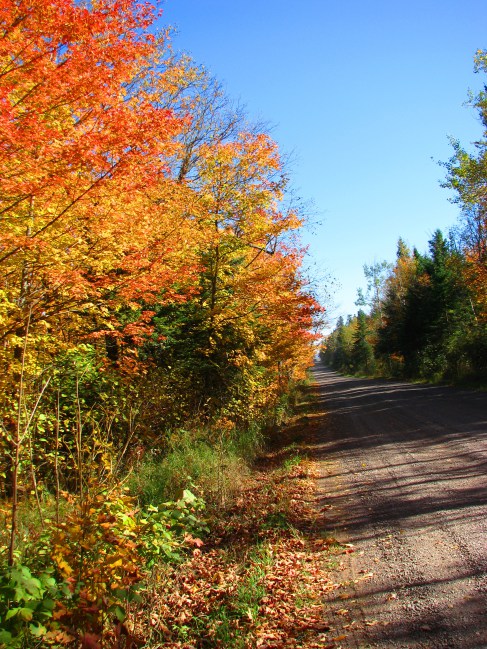
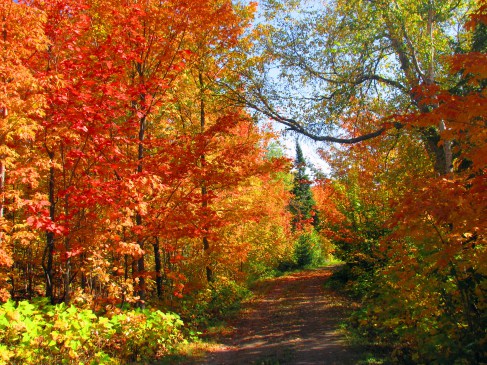
Colors are changing incredibly quickly along the maple ridges and inland and for those on Hwy 61 you will see the beginnings of color. Maple colors will be at peak within the next week in most, but not all places. The length of peak will depend upon wind and weather but we should have birch and aspen second peak colors beginning in a week to 10 days. So if you get a chance, take that trip, it will be a beautiful ride for you and your family. Here are some pics from past fall colors of that area.
img_84741img_9191img_9022img_8737img_8713

Anglers who fish trout streams in southeastern Minnesota can take advantage of a longer catch-and-release season this fall, will not be required to use barbless hooks, and will have a longer winter catch-and -release season too. The Minnesota DNR has extended the fall catch-and-release season to Wednesday, Oct. 15, for all streams in Dodge, Fillmore, Goodhue, Houston, Mower, Olmsted, Wabasha and Winona counties. This is a two week extension of the season.

Beginning Jan. 1, all southeast Minnesota streams will be open in winter to catch-and -release trout fishing, in a season that runs through April 17. Previously the season ended on the last day of March and was limited to far fewer streams.

Southeastern state parks will provide year round trout fishing opportunities with an extended catch-and-release season that runs from Sept. 15 through April 17, 2015 in the following waters; East Beaver Creek in Beaver Creek Valley State Park; Forestville Creek in Forestville/Mystery Cave State Park; Canfield Creek in Forestville/Mystery Cave State Park; South Branch Root River in Forestville/Mystery Cave State Park; Trout Run Creek in Whitewater State Park and Middle Branch Whitewater River in Whitewater State Park. For more information and the updated fishing regulations online, go to http://www.mndnr.gov/fishmn/trout.

Bow and Firearm Possession

Q. While hunting this fall, can I carry a shotgun for turkey and a bow for deer?

A. No. It is unlawful to possess a firearm while archery deer hunting. This applies to bow hunters with a crossbow permit as well. The exception is that if you have permit to carry a handgun, you may have it while archery deer hunting, but this provision does not extend to shotguns or rifles. If you’d like to use a shotgun for turkey, you’ll need to take your bow home, back to camp or secure it in a vehicle first. Lt. Mike Martin, DNR Enforcement Division district supervisor.

Sausage Time

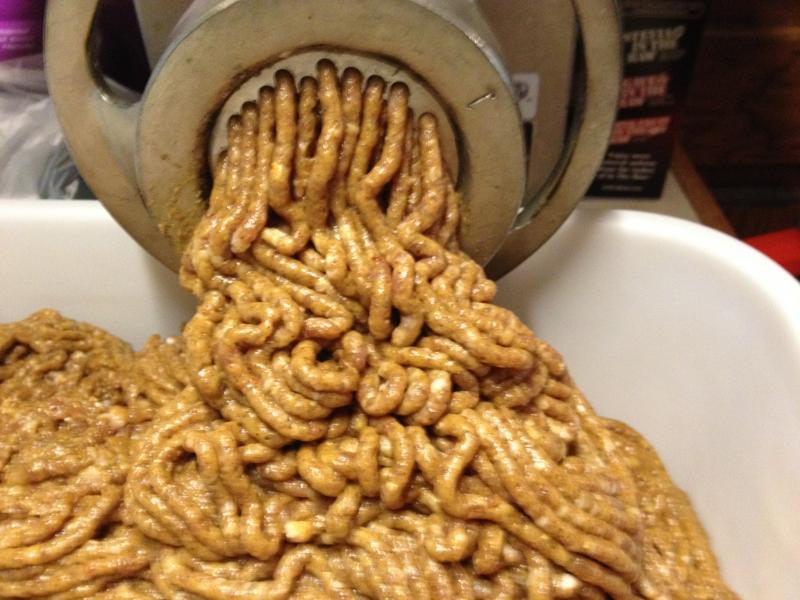
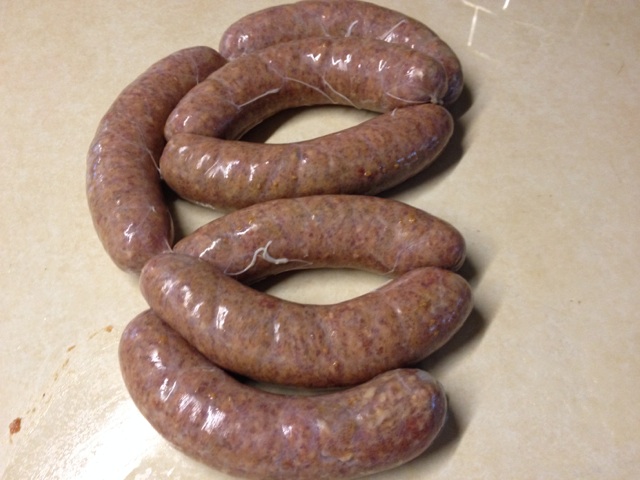
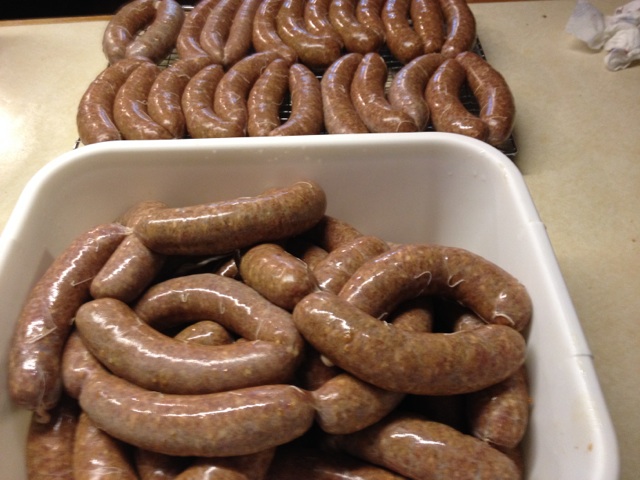
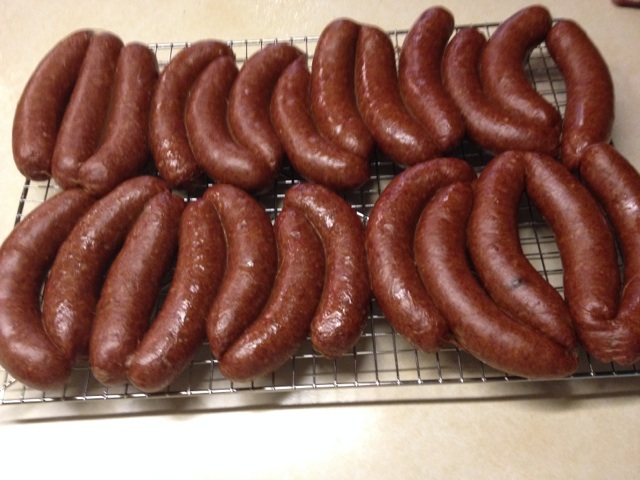
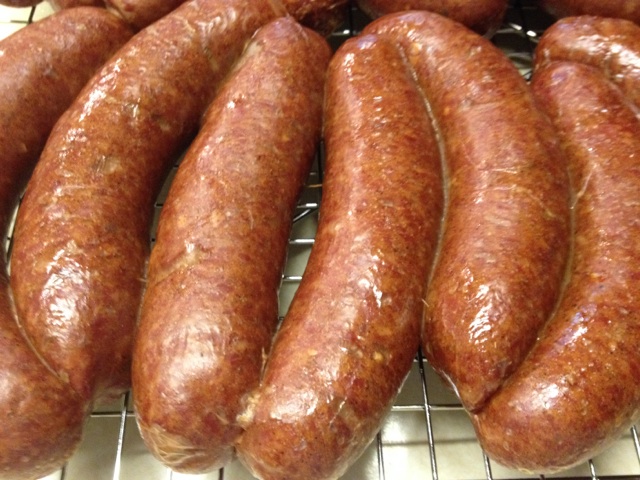
It’s getting very close to Deer Hunting Season and that mean’s thoughts of venison sausage are growing within my taste buds. I’m all out of venison, but I did pick up some pork butts and some beef to make some Chili Dogs the other day. Finished them off today. 25 pounds of which some will go to deer camp. Here are some pics of the last two day’s making these spicy sausages. Check out my Homemade Sausage Page for this recipe and lot’s more.
IMG_0989IMG_0993IMG_0994IMG_0997IMG_0998

Hunters making plans for upcoming seasons can get scouting and other services from Minnesota DNR digital tools. “Hunters have access to maps and aerial photos that can help in finding new hunting opportunities,” said Jay Johnson, huntrer recruitment and retention supervisor, “They can buy hunting licenses online including with a mobile phone, check hunting regulations or, after seasons open, go online to register a deer they harvested.”

In addition to registering a deer online, hunters can also go online to register a bear, wolf or turkey. While studying maps will rarely beat time spent outdoors hunting or scouting hunting land, these and other tools can help in planning routes to and from a deer stand, seeing terrain features and getting a better sense of an area.

Maps

The DNR Recreation Compass at http://www.mndnr.gov/compass.html includes everything from state forests to waterfowl production areas to Walk-In Access sites. Deer hunters can see the boundaries of deer permit areas and zoom in to see how permit area boundaries relate to where they hunt. The site also includes a mobile version. Hunter walking trails provide access to grouse and other small game huntin, with information at http://www.mndnr.gov/hunting/hwt.

At http://www.mndnr.gov/wmas, learn more about Minnesota’s more than 1,500 wildlife management areas [WMA] that include a total of more than 1.3 million acres managed as WMA’s. These areas are open to public hunting and trapping, as well as other uses such as hiking, wildlife watching and cross country skiing. Maps allow users to search by county for WMA’s. For each WMA, users can see what types of hunting area allowed, read reports on habitat management, and view maps that show locations of water and different types of trees or vegetation. A number of other mapping tools can be used. An index of some of them is at http://www.mndnr.gov/maps.

Hunting Information

The DNR’s hunting pages can be found through http://www.mndnr.gov/hunting, which links to a grouse hunting page at http://www.mndnr.gov/hunting/grouse, a waterfowl hunting page at http://www.mndnr.gov/hunting/waterfowl, and a deer hunting page at http://www.mndnr.gov/hunting/deer. Deer management information can be found at http://www.mndnr.gov/deer, which includes information about upcoming deer population goal setting. Hunting regulations can be found at http://www.mndnr.gov/regulations/hunting.

Licenses

Minnesota residents and non-residents interested in hunting can purchase licenses online at http://www.mndnr.gov/buyalicense. The site also includes online harvest registration, vehicle and boat renewal, and safety training certification.