I posted about the eagle cam before and here is an update from the DNR. The pair of eagles visiting the DNR eaglecam nest this year seems to be the same birds that saw two eaglets fledge and fly off last year. We were able to get a good view of the female’s leg-band, and it appears to be a match. As you may recall, these eagles laid their eggs during the first week of January in 2013 . In 2014 eggs were laid in mid-February [starting on Valentine’s Day]. We are seeing some activity in the nest, stick moving and sitting, but are hopeful that the recent cold temperatures [-15 F- actual air temp] will delay egg laying until later in February. Help us keep watch at http://www.webcams.dnr.state.mn.us/eagle.
THEY’RE BACK
January 14, 2015
WINTER TROUT FOOD
January 13, 2015
What do stream trout eat during the winter? With the expanded catch-and -release season now underway on southeastern Minnesota streams, winter anglers can expect to find insect hatches they might not have encountered before. Several members of the midge family are only present as adults in the winter, and they produce special antifreeze molecules within their bodies to tolerate frigid temperatures once they emerge from the stream. The most abundant of these midge species in southeastern Minnesota is Diamesa mendotae, which resembles a mosquito in both size and body shape. It is common to see swarms of them crawling on streamside snow banks, and a single trout may consume several hundered midges on a cold winter day.
Brachycentrus caddisflies also make up a significant portion of winter trout diets. Caddisfly larvae, often green or brown in color, detach from rocks and are picked off by trout as they drift through the water column. Aqatic amphipods, commonly known as scuds or freshwater shrimp, are another important winter food source for trout, especially in streams with abundant aquatic vegetation.
Interestingly, trout have been known to eat frogs that hibernate in many Minnesota streams. Larger trout also eat plenty of fish such as minnow, sculpin and even other trout. Mice and shrews are on the menu as well, so anglers would be wise to experiment with different size offerings. Vaughn Snook, Lanesboro assistant area fisheries supervisor, and Will French, DNR fisheries specialist.
2014 in review
December 31, 2014
The WordPress.com stats helper monkeys prepared a 2014 annual report for this blog.

Here's an excerpt:
The concert hall at the Sydney Opera House holds 2,700 people. This blog was viewed about 9,200 times in 2014. If it were a concert at Sydney Opera House, it would take about 3 sold-out performances for that many people to see it.
DNR AERATION PROGRAM
December 26, 2014
How does the DNR decide whether to aerate a lake to prevent winterkill of fish? The DNR does not aerate lakes, but they do issue permits to lake associations, counties and other local partners who want to aerate shallow lakes that are prone to winterkill due to lack of dissolved oxygen in the water. Public safety is the primary concern, so these permits require aerated parts of the lake to be clearly marked with thin ice signs and located away from high-traffic areas such as boat launches and snowmobile trails.
DNR fisheries and wildlife managers often provide guidance on whether or not aeration is a good idea for a given lake. Some shallow lakes are important habitat for water fowl, where fish compete with ducks and geese for food while stirring up sediment that can harm aquatic vegetation. In those cases natural winterkill of fish serves an important biological purpose. Marilyn Danks, DNR aeration program specialist.
WHAT IS ARCTIC SMOKE
December 9, 2014
What exactly is Arctic Smoke along the North Shore? What causes it? Arctic smoke occurs when the air is colder than Lake Superior’s water temperature. Lake Superior surface water is about 40 degrees at this time, but the air above the lake often plummets to well below zero. On most winter mornings, you can see steam from the warmer water rising and quickly cooling, creating the effect of smoke hanging above the water.
A rarer sight is spiraling columns known as steam devils, which occur when there is a large difference between the air temperature and the lake temperature. As the air coming off the lake cools rapidly, it creates updrafts that cause the spirals to form. You need very cold air temperatures and a slight wind to see them, but as we commonly have minus 20-degree days, you can usually catch them a couple times each winter. This is information from Kelsey Olson, Gosseberry Falls State Park naturalist.
SPRING TURKEY PERMITS START TODAY
December 1, 2014
People can apply for early season spring wild turkey hunting permits now through Friday, Jan. 9, according to the DNR. The spring season, which runs from April 15 to May 28, is divided into eight time periods. Only people age 18 and older who want to hunt during the first three time periods [A-C] need to apply for a spring turkey permit. Permits for the remaining time periods [D-H] can be purchased over-the-counter.
Permits for the last five time periods and youth licenses for anytime period are sold over-the-counter starting March 1. Surplus adult licenses from the first three time periods, if available, are sold starting around mid-March.
“There are a lot of options for hunters. You can apply for an early spring permit or buy one over-the-counter,” said Steve Merchant, DNR wildlife population and regulations manager. “For the second year, we’ve let youth hunt during all of the time periods, which makes it easier to introduce a young person to turkey hunting.” In Minnesota, hunters can hunt wild turkeys in spring and fall, but spring turkey hunting is much more popular. The first spring hunting time period begins on Wednesday, April 15.
Turkeys rear their young after the spring hunting season, and nesting success can influence how many turkeys are present during the fall hunting season that runs from early October through early November. For more information on turkey hunting, see http://www.mndr.gov/hunting/turkey.
FIREARMS DEER RESULTS
November 28, 2014
Minnesota hunters registered 111,000 deer through the third and last weekend of firearms deer season, down 31,000 from the same period in 2013 , according to the DNR. So far this year during special hunts and archery, early antlerless and firearms seasons, hunters have harvested 127,000 deer, down from the 2013 to-date harvest total of 160,000. This year’s lower harvest is by design because regulations were implemented to place more deer-particularly does-off limits to increase Minnesota’s deer population.
The DNR’s ongoing deer management work also includes upcoming revisions to the deer population goals for large portions or northeastern , north-central and east-central Minnesota. This is part of a multi-year goal setting process for rthe entire state. People interested in helping set these deer population goals can get more information on the process and opportunities for involvement at http://www.mndnr.gov/deer.
Additional deer will be harvested during the late southeastern season, which runs through Sunday, Nov. 30, and the muzzleloader season, which begins Saturday, Nov. 29, and continues through Sunday, Dec. 14. The archery season also runs through Wednesday, Dec. 31.
SAUSAGE FOR STUFFING
November 22, 2014
So you don’t have a grinder and that store bought sausage just isn’t doing it for you anymore. Most of us use pork sausage for stuffing for Thanksgiving stuffing. For me it’s a must have!! I have a grinder and make my own sausage all year long as most of you know. However I know some of you do not have a grinder and may be looking for a great recipe just to make a pound or two. Well here it is. All you need to do is buy some ground pork, and the seasonings, we usually have around the house. If not they are easy to get so let’s get to it.
Easy Tasty Pork Sausage
1 lb. ground pork
1 T brown sugar
3/4 tsp salt
1/2 tsp black pepper
1/4 tsp dried thyme
1/4 tsp dried rosemary
1/2 tsp dried sage
1/8 tsp marjoram
1/8 tsp ground nutmeg
pinch cayenne pepper [optional]
1 tsp smokehouse maple seasoning [optional] I use McCormicks [Grill Mates] Smokehouse Maple.
The cayenne is if you want a little heat and the Smokehouse Maple is of course if you want a little maple flavor in your sausage. In a large bowl, stir seasonings together with ground pork. Scoop into balls and form into patties. Fry in a nonstick skillet with a little cooking spray. Once they are done, put them on paper towels and serve as patties or just fry and chop the mix up as your frying into small pieces and use in your stuffing. Give it a try, you wont be disappointed. Have a great Thanksgiving everyone!!!!
FEWER DEER HUNTERS REGISTER DEER
November 13, 2014
Should not surprise anyone with bucks only in most of Minnesota. Also the weather in the last two years with the heavy snow and cold temps put deer numbers at very low levels so far. Minnesota hunters registered 54,000 deer during the first three days of firearms deer season, according to the Minnesota Department of Natural Resources. Final numbers from the weekend show that the number of deer registered dropped 30,000 from 2013. So far this year, including special hunts and the archery season, hunters have harvested 67,000 deer, down from the 2013 to-date harvest total of 100,000.
“Comparing this year’s harvest to harvests in previous years doesn’t necessarily reflect hunter opportunity or the number of deer on the landscape in 2014”, said Leslie McInenly, DNR big game program leader. This year’s lower harvest is by design because regulations were implemented to place more deer=particularly does-off limits to increase Minnesota’s deer population.
The DNR’s ongoing deer management work also includes upcoming revisions to the deer population goals for large portions of northeastern, north-central and east-central Minnesota. This is part of a multi-year goal-setting process for the entire state. People interested in helping set these deer population goals can get more information on the process and opportunities for involvement at http://www.mndnr.gov/deer.
In much of Minnesota, the deer season continues through Sunday, Nov. 23; the late southeastern season, which runs Saturday, Nov. 22, through Sunday, Nov. 30; and the muzzleloader season, which begins Saturday, Nov. 29, and continues through Sunday, Dec. 14.
SAUSAGE TIME!!!
October 31, 2014
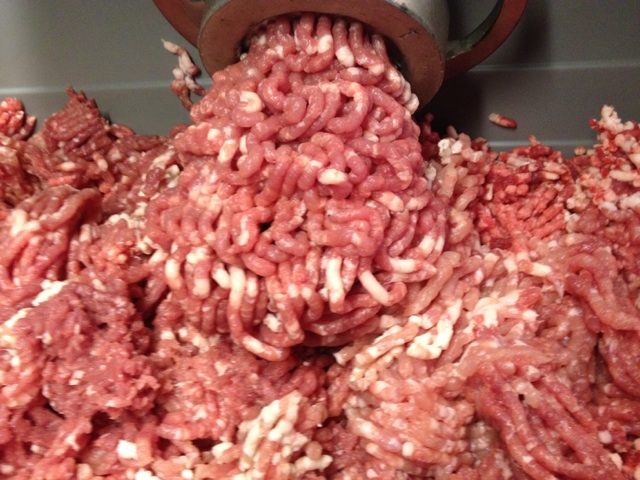
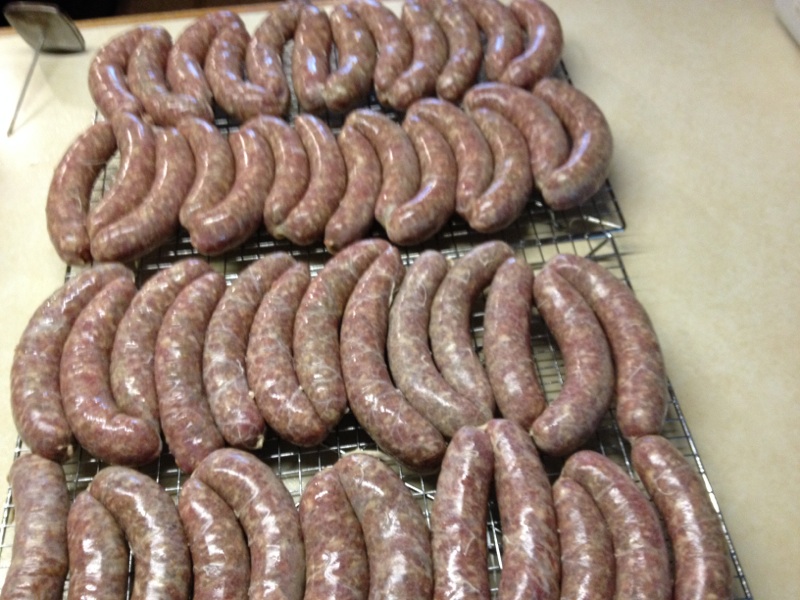
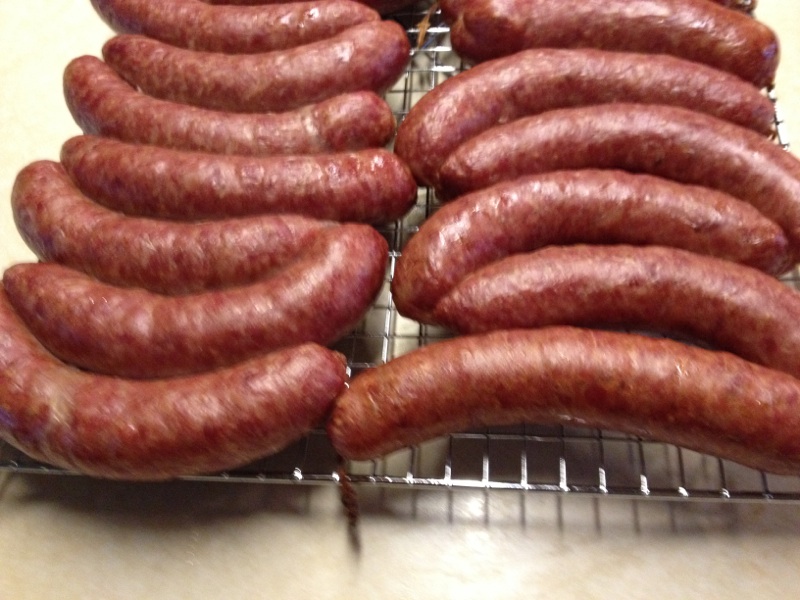
I make sausage all year long but for some of you the only time you get a chance to make sausage is after deer season. Maybe have someone make it for you as well. If you need some recipe’s and step by step methods for making sausage, check out my Homemade Sausage page. There you will find what you need for a variety of sausage. I just made some polish sausage for deer camp. Hopefully we get some venison with firearms deer season being just a week away. Here are some pictures of the polish I made this week.


 sausageheavenoutdoors Enjoy making homemade sausage, Tasty way's to BBQ, smoking meats and poultry. See how northern Minnesota was settled and the life early homesteader's lived their lives and more!!
Recent Comments